

If you've ever spotted fresh rhubarb at the farmers market or grown it in your own garden, you know its season is short and "sweet". Learning how to freeze rhubarb is the single best thing you can do to stretch that tart and tangy, beautiful vegetable all year long, so you're never without it when a craving for Strawberry Rhubarb Pie or Strawberry Rhubarb Cobbler strikes!
SAVE THIS RECIPE
Freezing rhubarb takes less than 10 minutes of prep, requires exactly one ingredient, and the method is super simple, even for a first-timer!
The best way to freeze rhubarb is flash freezing, no need to blanch rhubarb, just like I do in my How to Freeze Okra post. But I show you two other methods, just in case you prefer to try those.
Personally, I grew up eating rhubarb because of my Gramma Wilson, who grew her own plants in her Iowa garden and brought them along when she moved South to be closer to family.
She and my mom made the most incredible Strawberry Rhubarb Pie every spring! Since rhubarb season doesn't last long, and it doesn't grow well everywhere, I freeze mine for these kinds of recipes. Freezing it is the perfect solution for keeping that tangy flavor on hand for recipes all year round!
What is Rhubarb?
Rhubarb is actually a vegetable, not a fruit, though you'd never guess it from all the pies, jams, and cobblers it ends up in! It looks a bit like celery with its long, firm stalks, but those stalks are a deep red (sometimes green) and have an intensely tart flavor.
That's why rhubarb is almost always paired with sugar or sweet fruits like strawberries! And fair warning: one bite of raw rhubarb will make your mouth pucker!
When is rhubarb season and where does it grow?
Rhubarb thrives in cooler climates and is most commonly grown in the Midwest, the Pacific Northwest, and parts of Europe and Canada. It's a spring vegetable, typically available from April through June, though in some cooler regions it can stretch into early summer.
Down here in the South, fresh rhubarb can be harder to come by. Many of my Southern friends had never even laid eyes on it before! If you're having trouble finding it at your grocery store, ask the produce manager or check your local farmers market during spring.
Shortcuts
- Freeze rhubarb in pre-measured portions. If you have a go-to rhubarb recipe you make on repeat, freeze the raw sliced rhubarb in exactly the amount that recipe calls for. Label the bag with the amount and the recipe name to easily use for later!
- Use a salad spinner to dry the rhubarb quickly. After washing, spin the sliced pieces in a salad spinner instead of patting them dry by hand. It removes excess water fast!
- Skip the flash freeze if you're really in a hurry. The flash freeze step on a baking sheet keeps pieces from clumping together, but if you need to freeze rhubarb before it goes bad, just pile the dry slices into a freezer bag, remove the air, and seal it.
Ingredients
Scroll down to printable recipe for exact ingredient quantities.
- Fresh rhubarb stalks: That's it! Look for firm, crisp stalks with a deep red color-although some varieties are green). Rhubarb is in season in the spring and into early summer depending on where you live. Farmers markets are another great source for the freshest stalks. Always remove and discard the leaves before using. They are toxic and not edible.
How to Freeze Fresh Rhubarb
Scroll down to the bottom for the printable recipe with detailed instructions.
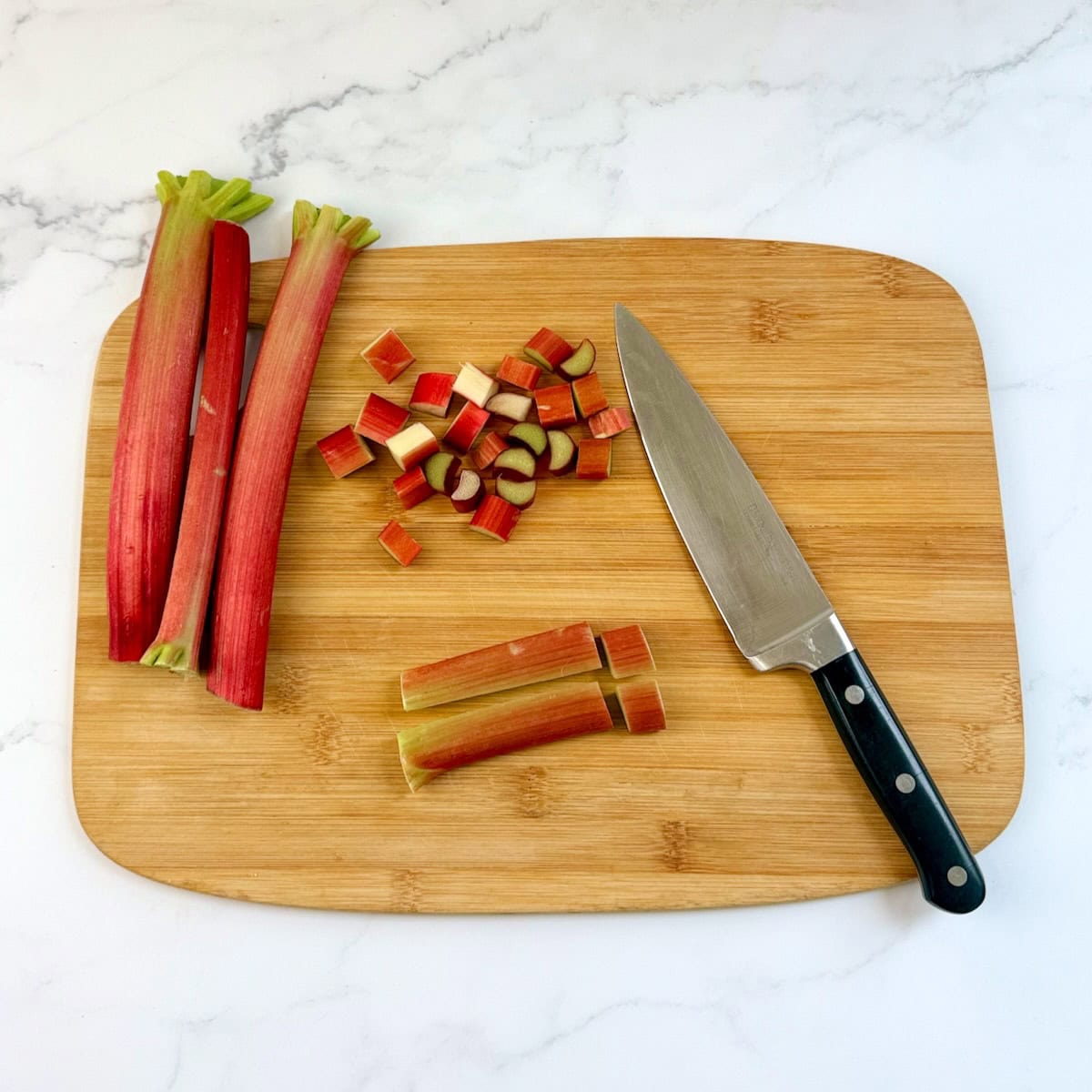
- Wash and dry the stalks. Remove the leaves. They are toxic.
- Slice into ½ to 1 inch pieces if the stalks are small. You may have to cut smaller if the stalks are huge.
Flash Freezing
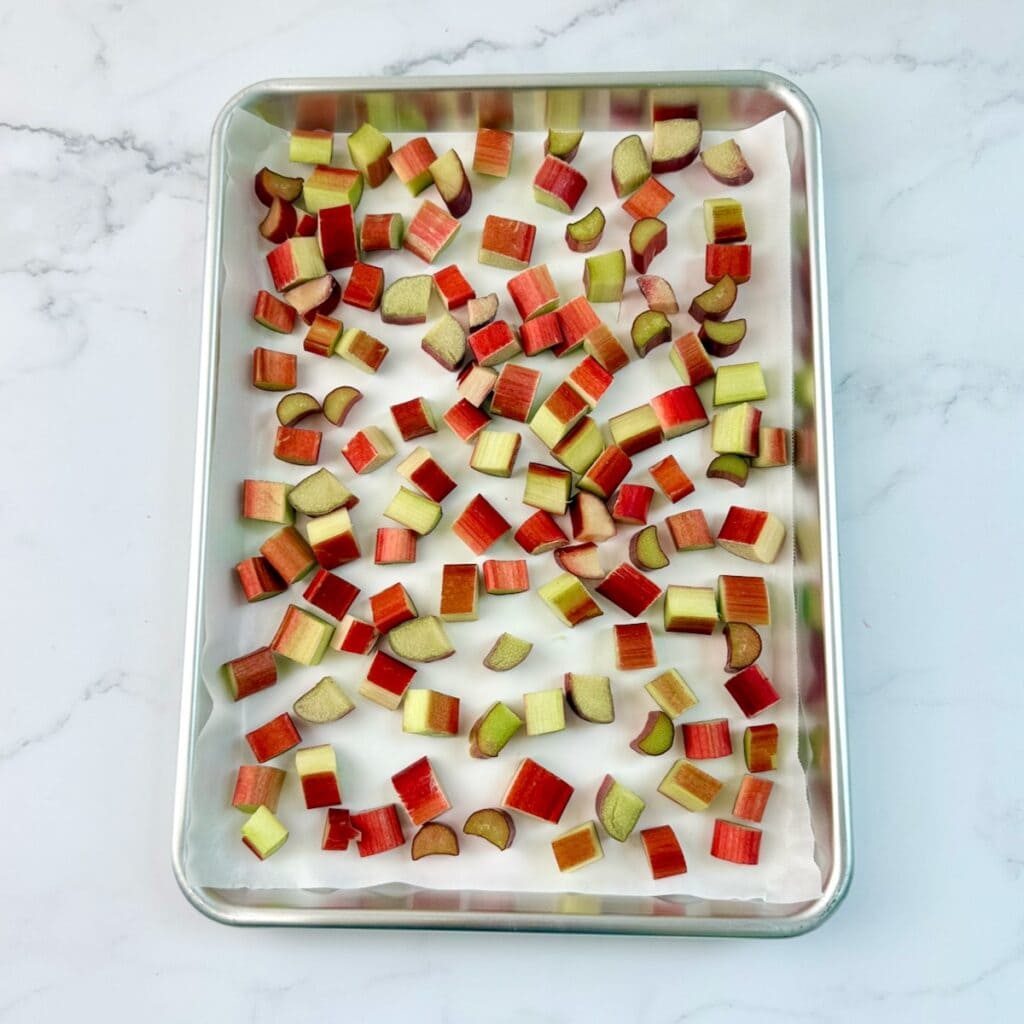
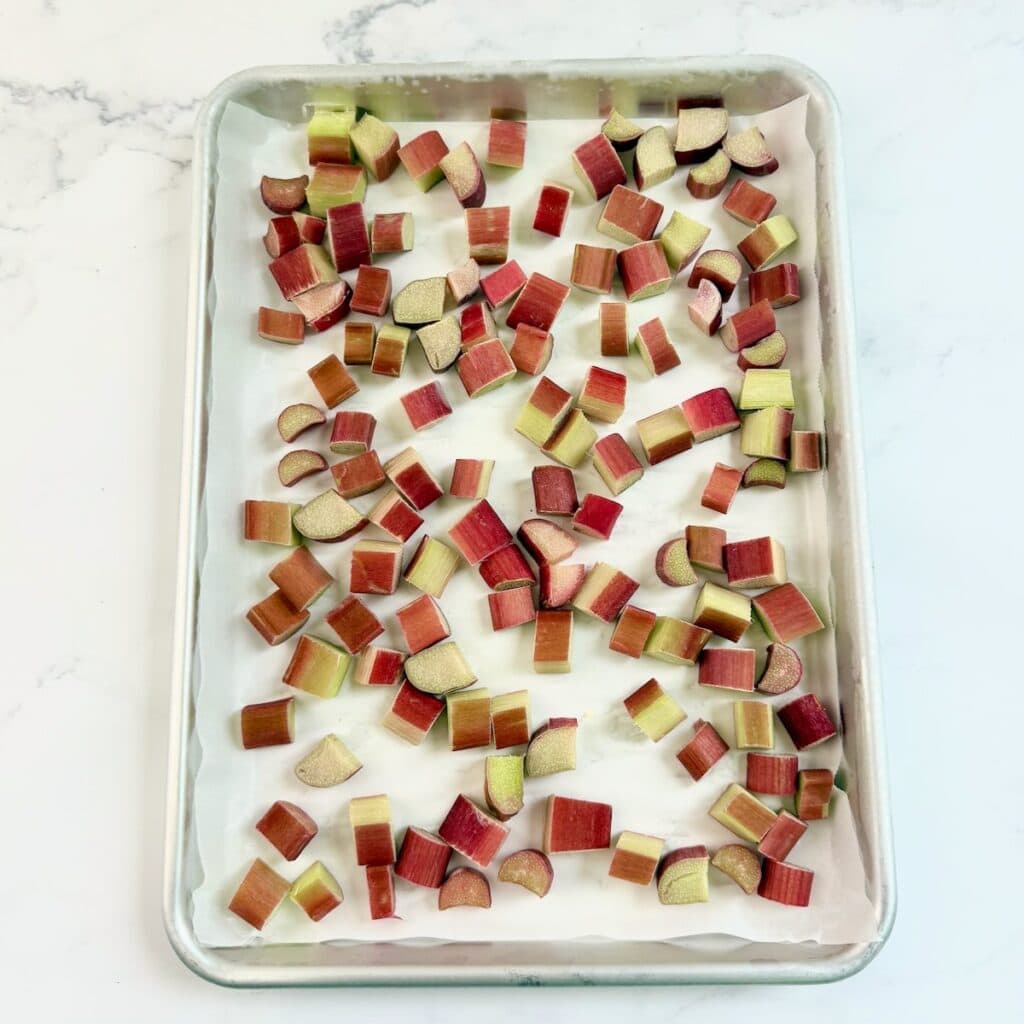
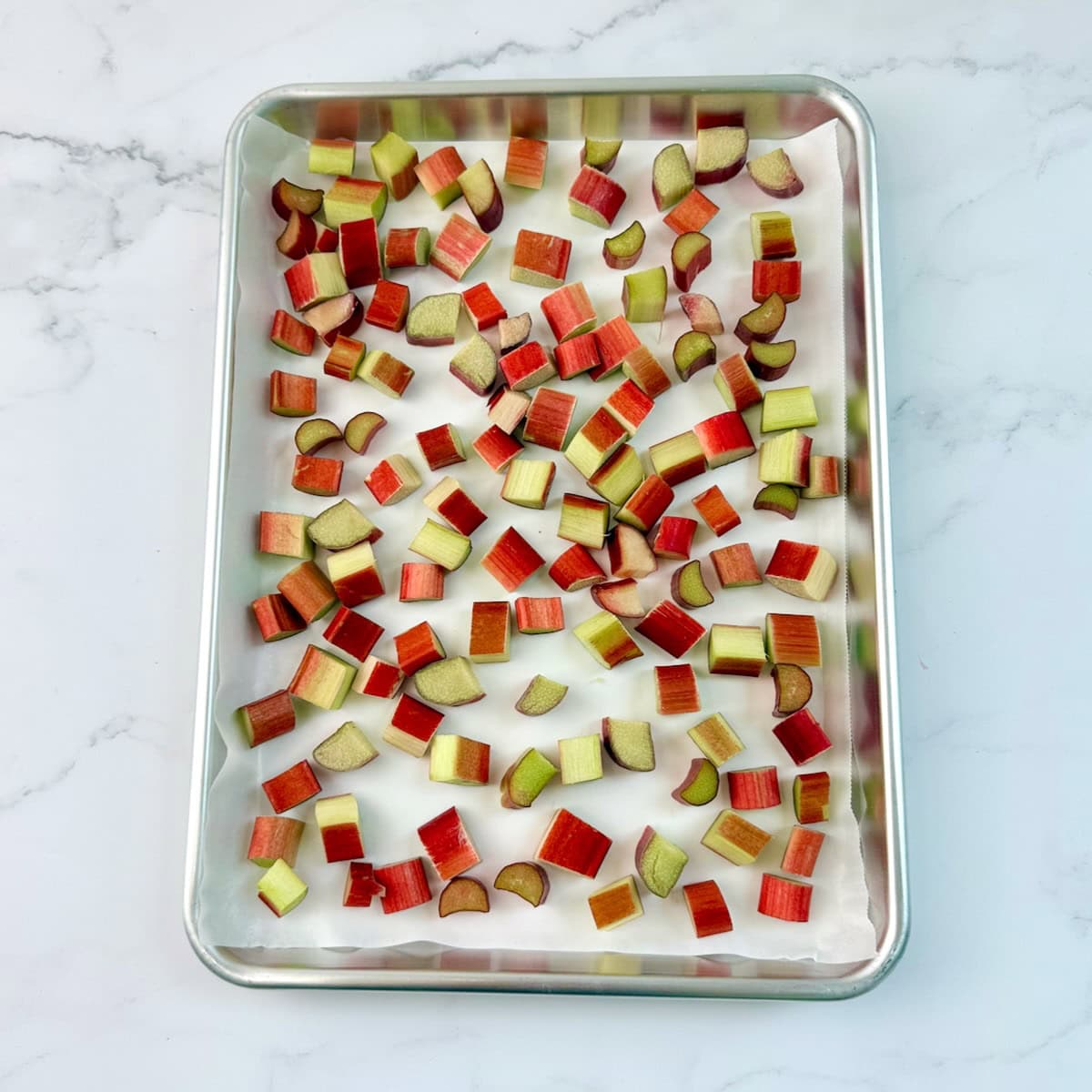
- Arrange in single layer on baking sheet. Freeze at least one hour until frozen. Fill a freezer bag, remove as much air as possible and seal tight for up to 1 year.
- This is called Flash Freezing.
Freezer Bag Freezing
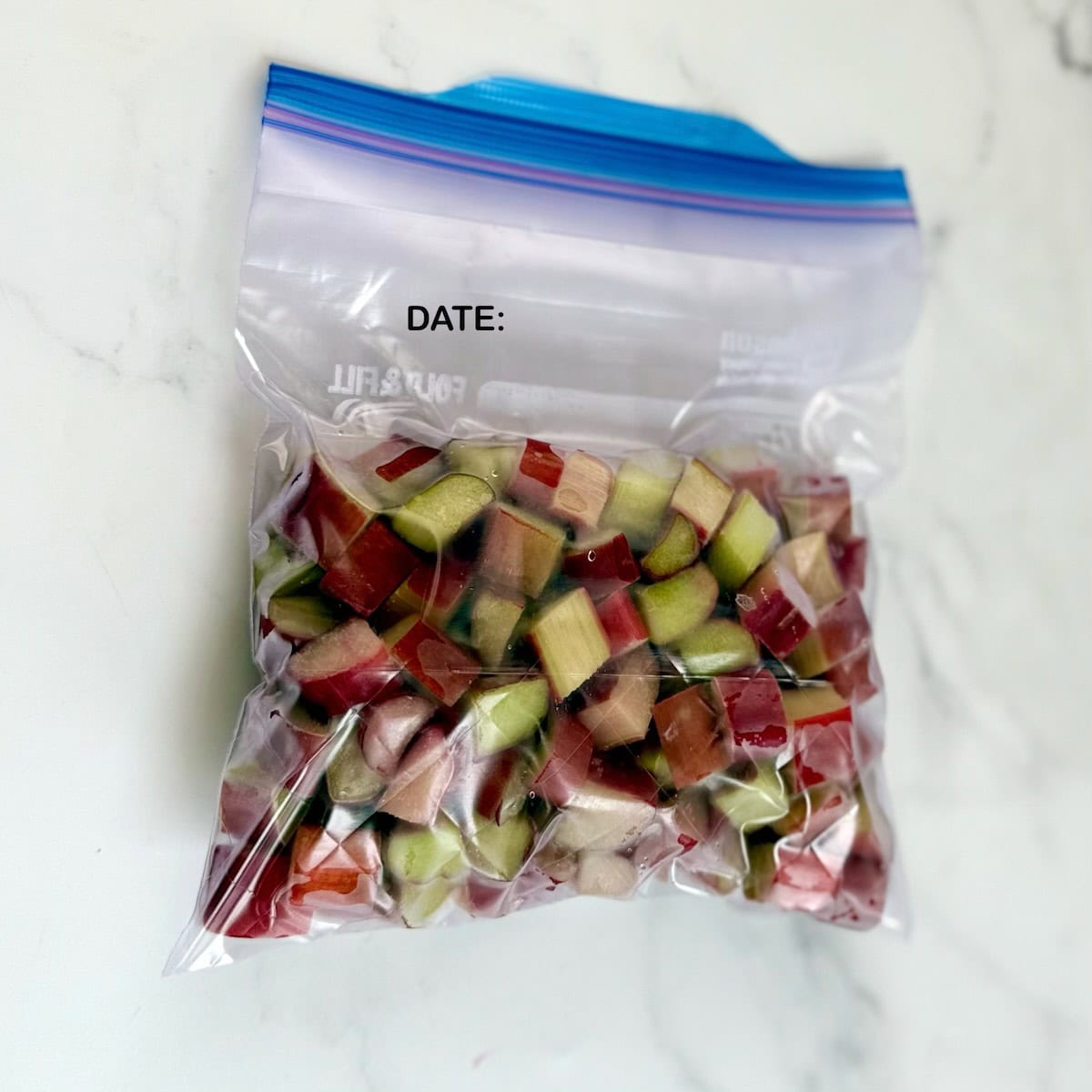
- You can also just pile the slices into the freezer bag, remove as much air as possible and freeze. The pieces may stick together in a clump if any moisture is present but that is definitely the quickest method.
Vacuum Sealed Bag Freezing
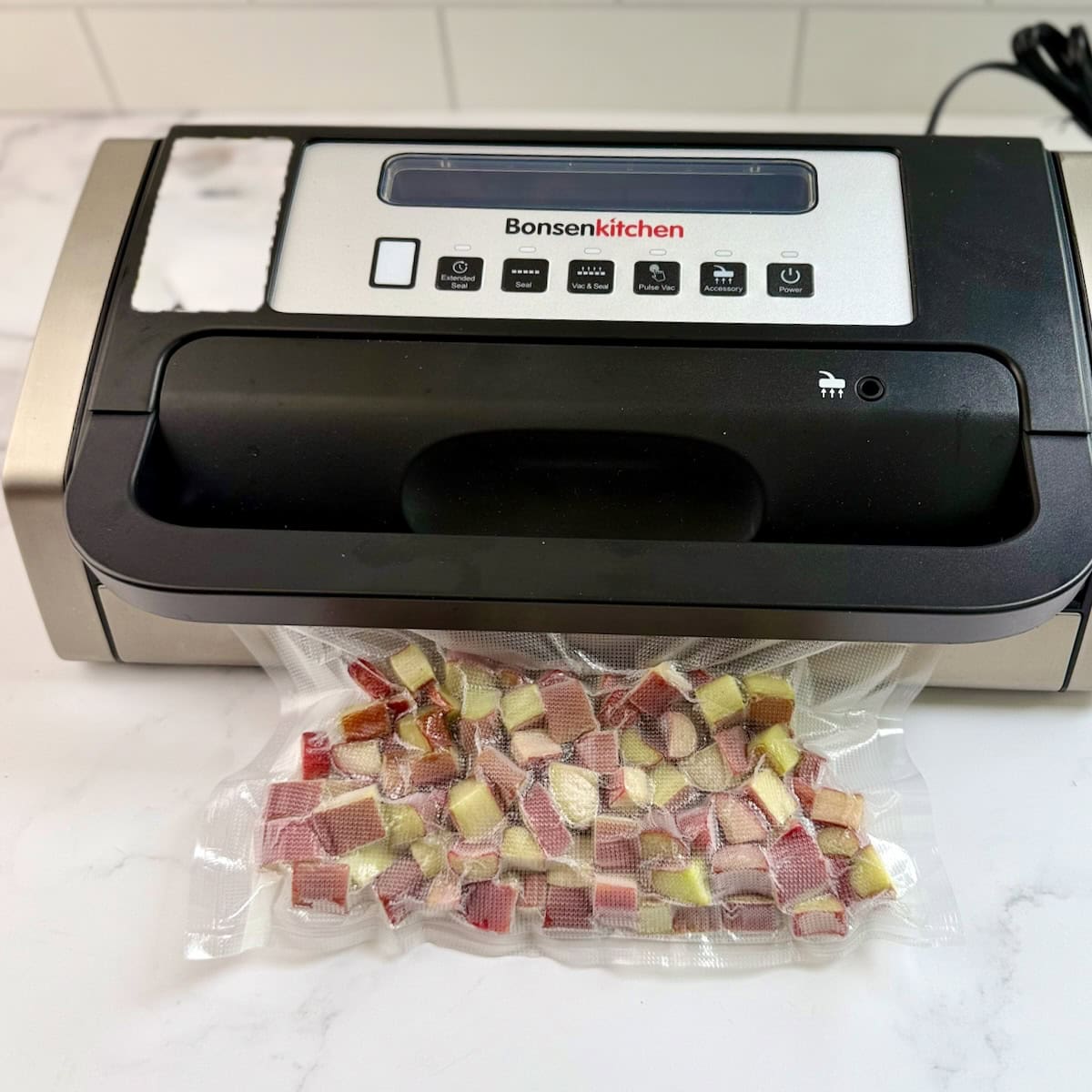
- OR, you can add the frozen slices to a vacuum seal bag, seal and they may last even longer than a year. This method is best in smaller portions so you aren’t opening the bag for enough for one recipe and lave leftovers with a broken seal.
- You can also skip the freezing in a single layer first (flash freezing) and just chop and seal if you don't mind them being frozen in a clump.
Freezing cooked rhubarb
You can also freeze steamed, boiled or stewed rhubarb. Cook it just long enough to soften it slightly. Then, let it cool to room temperature. Spoon it into freezer-safe containers, cover with lids and freeze up to at least 1 year.
Does freezing make rhubarb mushy?
Freezing does soften fresh rhubarb when it thaws and that may be considered "mushy". But that's fine for making cobblers and jam because it softens as it bakes, anyway.
Pro Tips
- The flash freeze step is worth it. While it's not technically required, spreading the rhubarb in a single layer on a baking sheet before bagging it is the key to individual, free-flowing pieces. This means you can measure out exactly what your recipe calls for!
- Dry the rhubarb well before freezing. Excess moisture leads to ice crystals, which can affect texture and cause pieces to clump together even if you flash freeze them. Pat the slices thoroughly dry with paper towels or give them a spin in a salad spinner before they go on the baking sheet.
How to Use Frozen Rhubarb
Frozen rhubarb is almost always used in cooked or baked recipes, and the good news is it goes straight from the freezer into most recipes without thawing. For pies, cobblers, and jams, just measure out your frozen rhubarb and add it directly.
If your recipe specifically needs thawed rhubarb (like if you're draining off excess liquid), place the frozen pieces in a colander set over a bowl and let them thaw in the refrigerator overnight. Use the drained liquid in smoothies or lemonade, it's delicious!
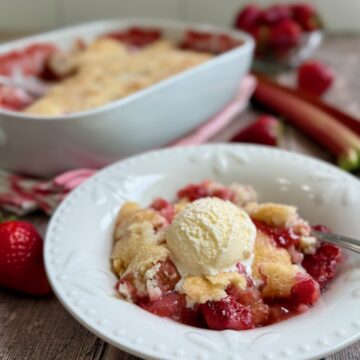
Ready to put that frozen rhubarb to work? Try it in my Strawberry Rhubarb Cobbler, Strawberry Rhubarb Jam, or Strawberry Rhubarb Freezer Jam!
Storage
- Freezer: Properly sealed frozen rhubarb keeps for up to 1 year in a zip-top freezer bag with the air removed.
- Vacuum sealed: May last even longer than 1 year, but it’s best frozen in smaller single-recipe portions to preserve the seal.
FAQ's
No, peeling is not necessary for most rhubarb. The one exception is very large, older stalks with especially thick, tough skin. In that case, peel it like celery by pulling the skin downward in strips, or use a vegetable peeler to make quick work of it.
Nope! Blanching is not necessary for rhubarb! Since rhubarb is rarely, if ever, eaten raw and is always cooked before using, blanching isn't required.
Besides the color, not really! Red rhubarb is often preferred for desserts and jams because it gives recipes that beautiful rosy color, but green rhubarb tastes essentially the same and works just as well in any recipe.
The best way to freeze rhubarb is to flash freeze it by spreading the sliced pieces in a single layer on a baking sheet, freeze until solid (about an hour), then transfer to a zip-top freezer bag with as much air removed as possible!
Want More Easy Freezer Recipes?
Leave a comment below the printable recipe if you have questions or tell me how you liked the recipe. Don't forget to rate it 5 stars if you love it!
Follow me on Facebook, Instagram, Pinterest and YouTube. Be social and share, y'all! Want all my new recipes and updates? Get my weekly newsletter in your inbox!
How to Freeze Fresh Rhubarb
SAVE THIS RECIPE
Ingredients
- 1 pound Fresh rhubarb stalks
Instructions
- Remove any green leaves and tough ends from the stalks of the rhubarb. The green leaves are toxic, so discard them immediately. Wash the stalks thoroughly under cold running water and pat dry (or use a salad spinner for speed).
- Slice into ½-inch to 1-inch pieces. If you have very large, thick stalks, you may need to cut them a bit smaller for even freezing.
- Arrange the slices in a single layer on a baking sheet lined with parchment paper. Freeze for at least 1 hour, or until the pieces are frozen solid. This step is called flash freezing and prevents the pieces from freezing into one big clump.
- Transfer the frozen slices to a zip-top freezer bag, remove as much air as possible, and seal tightly. Freeze for up to 1 year.
- Alternative freezing method: If you're in a hurry, skip the baking sheet step and pile the dry slices directly into a freezer bag. Remove the air and seal. The pieces may freeze together in a clump, but since rhubarb is always cooked before eating, this works just fine!
- Vacuum seal option: For the longest shelf life, transfer the flash-frozen slices to a vacuum seal bag and seal. Vacuum-sealed rhubarb can last longer than a year. This method works best in smaller, single-recipe portions so you're not re-opening and resealing a broken bag.
- Yield: about 3 cups
Notes
- Dry the stalks well before slicing and freezing; excess moisture causes ice crystals and clumping. I like to use a salad spinner to make quick work of it!
- No need to peel most rhubarb. Only peel very large, older stalks with especially thick, tough skin.
- Flash freezing on a baking sheet first is the best method. It keeps pieces separate so you can measure out exactly what a recipe calls for instead of chipping apart a frozen clump.
- Freeze in recipe-sized portions and label the bag with the date and amount for a ready-made shortcut every time you bake.
- To use from frozen: Add rhubarb directly to most cooked recipes without thawing. To thaw, place in a colander over a bowl in the refrigerator overnight.
- Storage: Up to 1 year in a zip-top freezer bag; potentially longer with a vacuum sealer.
Nutrition
Nutrition analysis on GritsAndGouda.com recipes are mostly calculated on an online nutrition calculator. I am not a dietitian and nutritional information is an estimate and can vary based on products used.
Comments
No Comments