
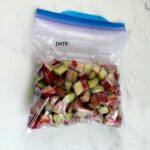
How to Freeze Fresh Rhubarb
Freezing rhubarb is the easiest way to preserve it so you have it on hand all year long for pies, jams, and cobblers, and it takes less than 10 minutes of prep! Three easy ways to freeze fresh rhubarb.
Servings: 3 cups
Calories: 1cup
Ingredients
- 1 pound Fresh rhubarb stalks
Instructions
- Remove any green leaves and tough ends from the stalks of the rhubarb. The green leaves are toxic, so discard them immediately. Wash the stalks thoroughly under cold running water and pat dry (or use a salad spinner for speed).
- Slice into ½-inch to 1-inch pieces. If you have very large, thick stalks, you may need to cut them a bit smaller for even freezing.
- Arrange the slices in a single layer on a baking sheet lined with parchment paper. Freeze for at least 1 hour, or until the pieces are frozen solid. This step is called flash freezing and prevents the pieces from freezing into one big clump.
- Transfer the frozen slices to a zip-top freezer bag, remove as much air as possible, and seal tightly. Freeze for up to 1 year.
- Alternative freezing method: If you're in a hurry, skip the baking sheet step and pile the dry slices directly into a freezer bag. Remove the air and seal. The pieces may freeze together in a clump, but since rhubarb is always cooked before eating, this works just fine!
- Vacuum seal option: For the longest shelf life, transfer the flash-frozen slices to a vacuum seal bag and seal. Vacuum-sealed rhubarb can last longer than a year. This method works best in smaller, single-recipe portions so you're not re-opening and resealing a broken bag.
- Yield: about 3 cups
Notes
- Dry the stalks well before slicing and freezing; excess moisture causes ice crystals and clumping. I like to use a salad spinner to make quick work of it!
- No need to peel most rhubarb. Only peel very large, older stalks with especially thick, tough skin.
- Flash freezing on a baking sheet first is the best method. It keeps pieces separate so you can measure out exactly what a recipe calls for instead of chipping apart a frozen clump.
- Freeze in recipe-sized portions and label the bag with the date and amount for a ready-made shortcut every time you bake.
- To use from frozen: Add rhubarb directly to most cooked recipes without thawing. To thaw, place in a colander over a bowl in the refrigerator overnight.
- Storage: Up to 1 year in a zip-top freezer bag; potentially longer with a vacuum sealer.
